Industrial Automation: Definition, Examples, and Benefits
Industrial automation consists of the integration of mechanical, electronic, and IT technologies to manage production processes through intelligent and interconnected systems. Thanks to these systems, the factory ecosystem can achieve levels of precision and speed that were once unimaginable, while also ensuring greater safety for personnel.
Embarking on an automation journey requires careful planning, with a clear long‑term view of costs and benefits. Understanding which technologies to adopt and how to calculate ROI based on the characteristics and needs of your company is essential to avoid mistakes that could compromise the investment.
In this article, we will explore in detail what industrial automation is, what its main applications are (with examples), and how to choose the right partner—one capable of managing the entire lifecycle of an automation project, from requirements analysis to ongoing maintenance.
Contents
Industrial Automation: What It Is and What It Includes
Industrial automation is based on the integration of mechanical, electronic and IT technologies to create systems capable of managing a factory’s production processes with minimal human intervention.
Many mistakenly believe that automation exists to replace line operators, when in reality its objective is:
Greater efficiency in managing costs and waste;
Greater safety and empowerment of personnel, who no longer need to perform repetitive, low‑value tasks.
To understand how automation works, we need to examine three fundamental components:
Sensors and actuators: The physical interface between the control system and the real world. Without this component, the system would be blind and inert. Sensors detect physical variables and convert them into electrical signals. They can measure critical parameters such as temperature, pressure, position, speed or the presence of objects. Actuators receive commands from the control system and convert them into mechanical action. They include electric motors, pneumatic cylinders, valves and robotic arms used for tasks such as handling heavy loads or assembling components.
PLCs and Industrial PCs: They receive field signals, process them according to programmed logic and send instructions to actuators. More specifically, a PLC is an industrial computer designed to run a cyclic program: it reads sensor states, processes software logic and instantly updates the actuators. The Industrial PC (IPC) offers greater computing power and memory to handle more complex tasks such as machine vision or processing large amounts of local data.
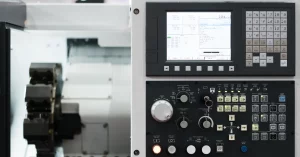
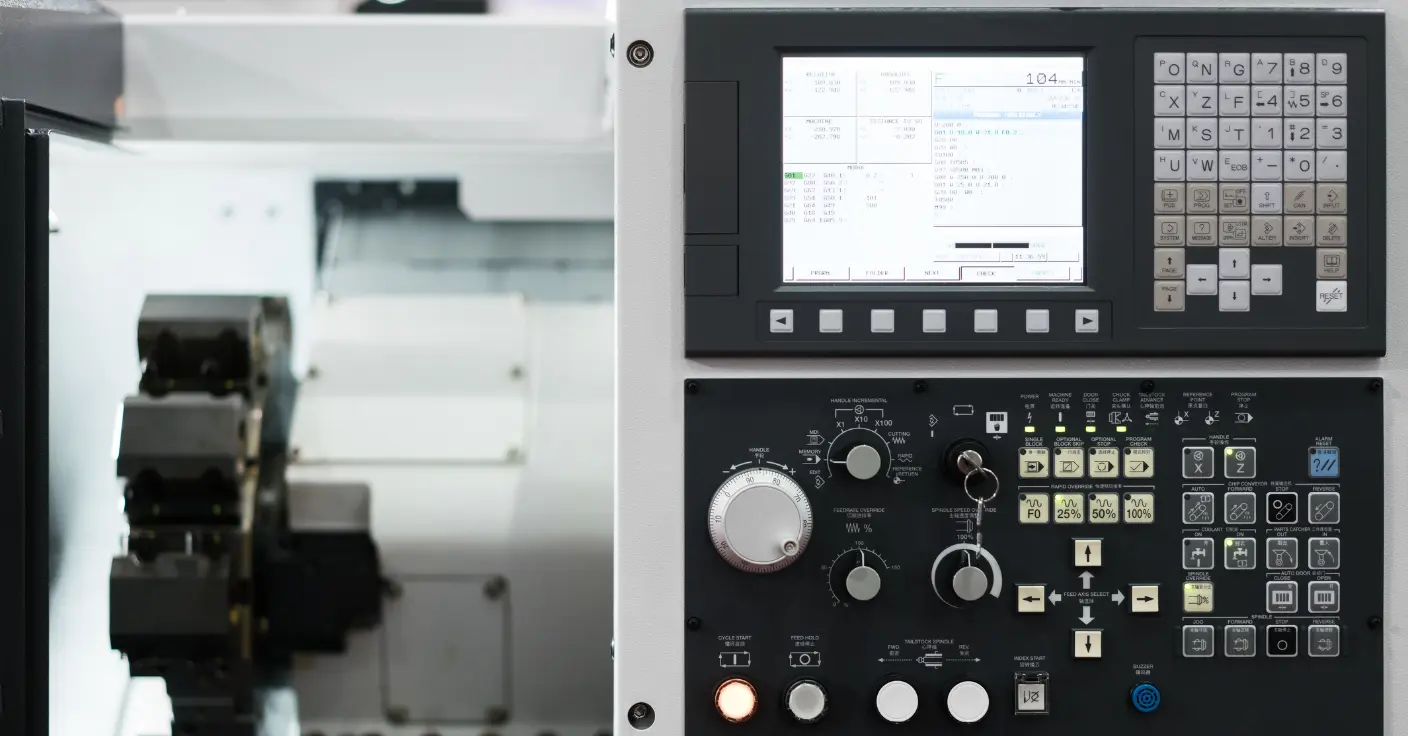
HMI and SCADA: While PLCs and IPCs control the machine, HMI and SCADA manage the interaction between humans and technology. An HMI system typically consists of a touchscreen terminal mounted on the machine, allowing operators to view system status, set production parameters or read errors. SCADA systems, on the other hand, are high‑level software solutions that monitor the entire plant—not just one machine. They collect data from multiple PLCs, store production history and provide detailed graphical analyses to identify bottlenecks or quality deviations.
Integrating these components transforms production into a symbiotic, fluid system.
In companies without automation, efficiency often depends on the skills and empirical knowledge of operators. This inevitably leads to silo‑based management where errors emerge only in the final stages of the process, when correcting them often comes at a high cost.
Automation eliminates this approximation through a constant, objective flow of information. Thanks to sensors capable of extracting raw data directly from the field, every machine acquires its own “knowledge”. The system operates based on physical parameters—such as vibration or temperature—that continuously feed the control logic, providing a scientific foundation for every operation instead of relying on uncertain estimates.
Subsequently, the PLC or Industrial PC processes the information in real time and transforms it into precise instructions for the actuators.
This mechanism ensures that the product is manufactured according to the required technical specifications, stabilizing production at quality levels independent of external variables.
An integrated architecture also makes it possible to track work progress—even remotely—identifying anomalies the very moment they occur. This capability enables timely intervention, safeguarding the integrity of the job before it becomes compromised.
Thus, the fallibility of sample‑based inspections is replaced by total and preventive monitoring that guarantees consistent quality for every single item produced.
Automation, therefore, is synonymous with compliance, evolving from a simple mechanical aid to one of the pillars of the modern factory, alongside Industry 4.0 technologies. The final result for the company is a shift from reactive production to processes entirely driven by data.
What Are the Main Applications of Industrial Automation?
Understanding how automation applies across the diverse ecosystem of a factory can help you map your company’s production processes, identifying those bottlenecks where the intervention of an intelligent system could generate the maximum return on investment.
Modern industrial automation can meet the needs of every production chain through solutions that range from intelligent load handling to high‑precision mechanical processing.
Each application is part of a broader strategy that, as mentioned, aims to optimize internal resource usage (thus reducing waste, environmental footprint, and unnecessary costs) and to improve operators’ quality of life, enabling them to focus increasingly on supervising processes rather than performing strenuous tasks.
Let’s now look at the main applications of industrial automation.
Starting with an analysis of industrial automation applications based on the activities carried out within a manufacturing company.
Type of Activity
Automation Example
Technologies Involved
Processing
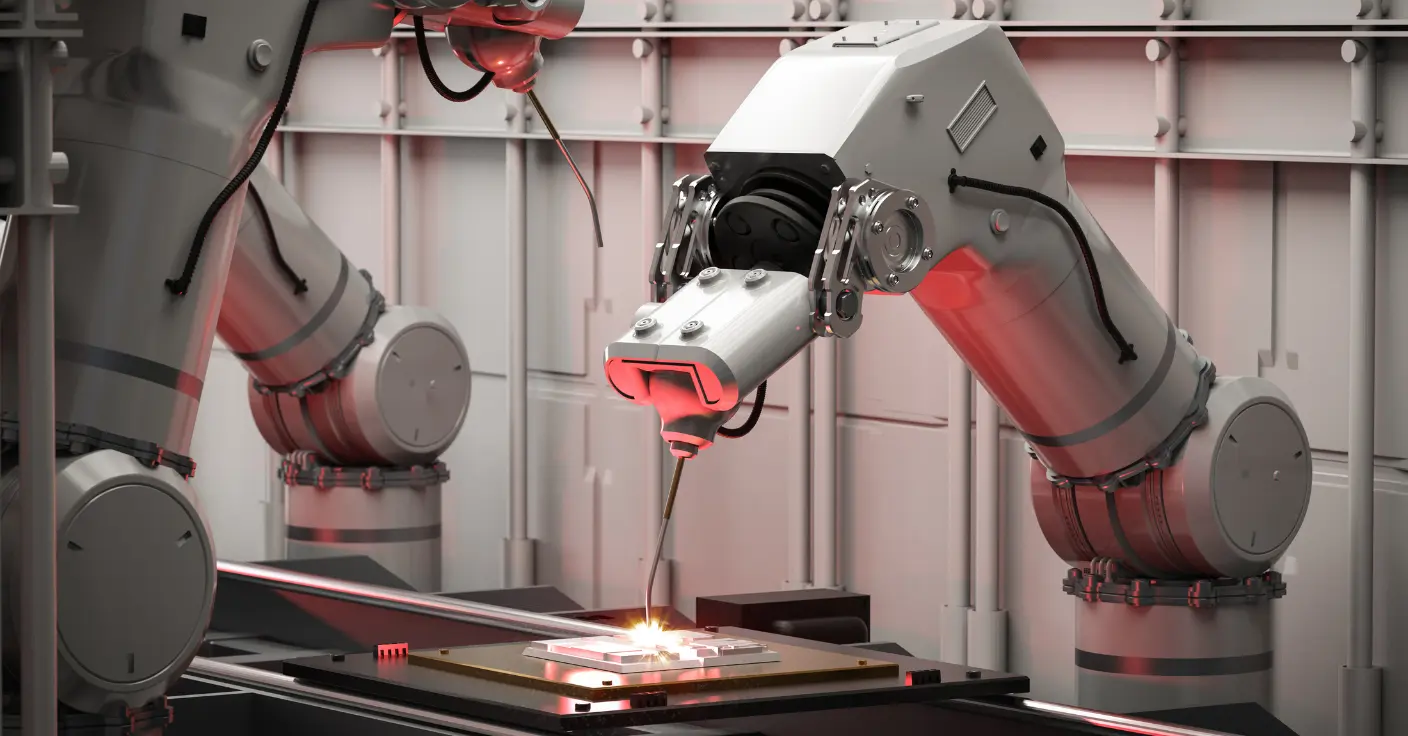
Automation controls the transformation of raw materials. Through programmed millimetric trajectories and constant monitoring of parameters such as cutting speed and pressure, machines perform chip removal, plastic deformation or thermal joining with a level of precision that ensures each piece complies with the original technical design.
CNC machining centers
High‑power lasers
Robotic welding cells
Extrusion systems
Logistics
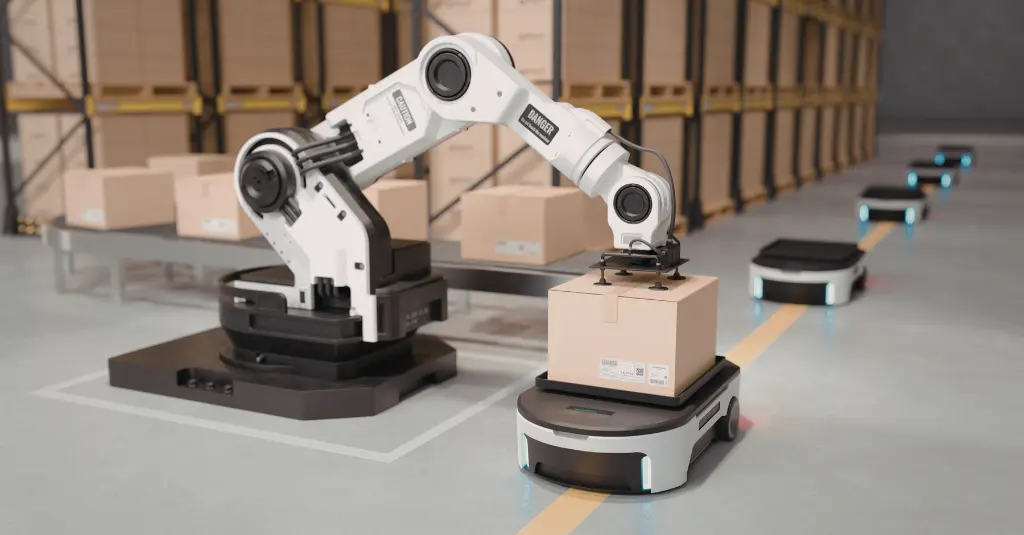
An automated system can manage the flow of materials throughout the plant, orchestrating load movements without the need for human guidance. This application synchronizes supply timing with production rhythms, optimizes paths to avoid congestion, and ensures a safer working environment.
Autonomous Guided Vehicles
Mobile robots
Vertical warehouses
Intelligent conveyor systems
Packaging
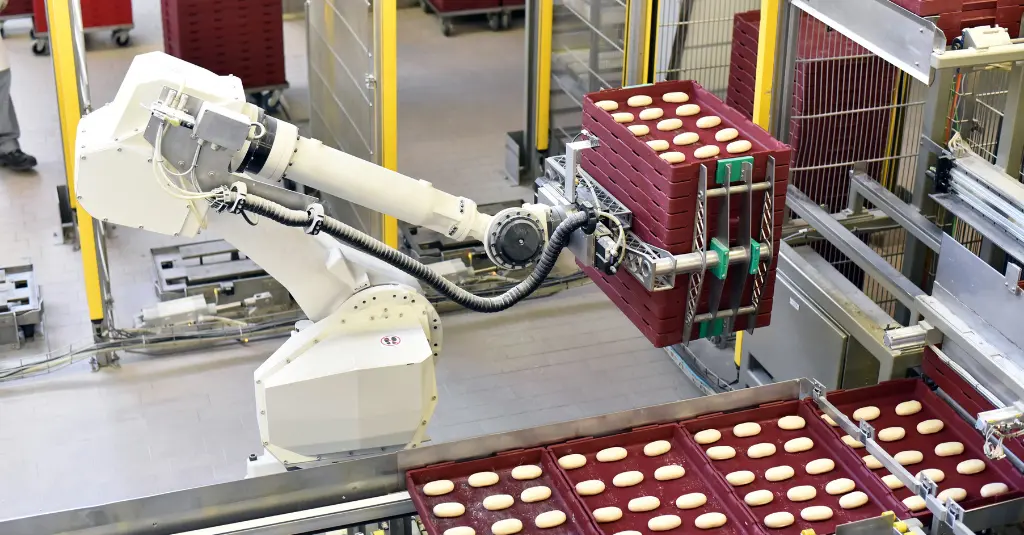
Automation manages the preparation of goods for distribution. It can rapidly handle product insertion into packaging, apply safety seals, and create palletized loads. It also ensures that packaging is suitable for transport and compliant with the company’s aesthetic and functional standards.
Palletizing robots
Screw‑driving systems
Packaging machines
Labeling systems
Inspection
A constant quality‑control process is implemented along the line, where sensors scan each unit to identify dimensional deviations or defects invisible to the naked eye. In case of anomalies, the system immediately rejects the non‑compliant item, preventing unnecessary downstream processing.
Machine vision systems
Laser displacement sensors
Thermal cameras
Profilometers
Maintenance
Automation enables a shift from reactive to predictive maintenance, supported by recent AI integration, by analyzing machine health indicators during normal operation. By detecting anomalies in energy consumption or mechanical vibrations, the system can predict component wear, allowing maintenance to be scheduled only when needed and without stopping production.
IIoT sensor systems
Data analytics software
Predictive maintenance algorithms
Finishing
Automation ensures uniform coating application and surface smoothing. Robots reproduce movements that maintain consistent pressure on every point of the piece, delivering an impeccable aesthetic result impossible to replicate manually on large production batches.
Sanding and polishing robots
Powder‑coating systems
Deburring machines
Traceability
A permanent digital record is created for every product manufactured. Through automatic marking and code reading, the system tracks each stage of the supply chain, associating every piece with data related to materials used, processing times, and inspection outcomes, enabling transparent data management.
Laser markers
1D/2D code‑reading systems
RFID technology
MES software
Testing
The product is subjected to intensive test cycles that simulate operating conditions. The system accurately measures mechanical, electrical or pneumatic responses, validating performance. Only products that pass all tests are cleared to leave the factory.
Load simulators
Electrical and pneumatic test systems
Examples of industrial automation by production activity
Now let’s examine how automation can be applied to specific industries.
Industry Type
Automation Example
Technologies Involved
Mechanical
Automation ensures the creation of components with minimal error tolerances. Systems manage fast‑paced cycles on metals or plastics, where consistent force and speed are essential for maintaining structural quality.
Multi‑axis machining centers
Machine‑tending robots
In‑line laser measurement systems
Automotive
A historic sector for automation, where assembly lines operate through synchronized robots. Additional applications include body welding and electronic testing of vehicle functions.
Robotic welding lines
Vision‑guided assembly systems
Automated testing benches
Food
Automation focuses on high‑speed packaging and maintaining hygiene standards. Systems manage filling and packaging operations while eliminating direct contact between operators and products.
Pick & Place robots
Vision systems for contaminant detection
Sterile bottling lines
Pharmaceutical
Automation ensures sterility and precise dosing of active substances. Systems operate in controlled environments, managing production and blister packaging according to strict protocols.
Cleanroom‑rated robots
High‑precision dosing systems
Machine vision for batch control
Electronics
Automation handles the manipulation of microscopic components at high speeds. For example, machines assemble electronic boards by positioning chips with extreme accuracy.
Pick & Place machines
Reflow soldering systems
Automated optical inspection (AOI)
Logistics
Storage and sorting flows are optimized, enabling more efficient order management even during seasonal peaks.
Automated stacker‑crane warehouses
High‑speed sorting systems
Autonomous guided vehicles
Furniture
Automation supports cutting and surface finishing operations. Coating and sanding systems follow the company’s predefined aesthetic standards while reducing operator exposure to dust and chemical vapors.
Painting robots
CNC panel saws
Automatic sanders
Plastics
Automation manages the extraction of hot parts, sprue removal and packaging, ensuring consistent production cycles and significantly reducing cooling times.
Cartesian robots
Vacuum‑handling systems
Conveyors with sprue separators
Textile
Automation enhances computerized cutting and yarn processing, enabling the creation of complex weaves with efficient material usage.
CNC cutting machines
Automated looms with break sensors
Controlled dyeing systems
Examples of industrial automation by sector
Industrial Automation: Costs and Benefits for Manufacturing Companies
Once the technical components are understood and the most suitable application is identified for the company’s sector and for the activities that require efficiency improvements, the business can finally define an investment strategy in automation.
However, evaluating an investment of this magnitude requires an in‑depth analysis of both short‑term and long‑term benefits. Only in this way is it possible to calculate a realistic ROI.
The value of an automation project impacts several economic drivers that accelerate capital recovery through a structural improvement in margins:
Plant saturation. Automation makes it possible to decouple production capacity from the physical limits of work shifts. Producing more units within the same time frame (often with 24/7 operation cycles) allows fixed costs to be spread over a larger volume of products. This increases potential revenue without a proportional rise in overhead costs.
Reduction of Cost of Goods Sold (COGS). The precision of automated systems ensures optimal use of raw materials. With a drastic reduction in cutting, dosing, or assembly errors, waste decreases and the costs associated with scrap disposal are reduced. Every gram saved is a direct gain on the margin of each item produced.
Elimination of “poor quality” costs. Automated quality control makes fewer mistakes compared to traditional processes. It increases the likelihood that each outgoing part meets standards, reducing hidden costs such as returns, contractual penalties for delays, and hours spent on post‑sales support.
OEE optimization. The integration of diagnostic systems reduces downtime. By constantly monitoring performance, it is possible to ensure that the asset produces value for as long as possible and at the highest possible speed. Even a 5% increase in the OEE index can shorten the payback period by several months.
Improved risk management. Increased workplace safety stabilizes administrative expenses thanks to lower insurance premiums and reduced costs related to incident management.
To ensure the calculation is reliable, these drivers must be compared against the Total Cost of Ownership, including the main cost categories:
CAPEX: the expenditure required to acquire the physical and digital assets needed to build the system architecture.
Hardware: purchases of physical components such as robots, sensors, PLCs, actuators, and IPCs.
Software: licenses required to operate the factory intelligence, from SCADA and MES systems to data analytics platforms.
Integration services: the cost of automation professionals (system integrators) responsible for enabling communication between new technologies and existing machines, ensuring ecosystem interoperability.
Implementation costs: often underestimated, these determine how quickly the system becomes fully operational.
Commissioning: expenses for physical installation, wiring, and safety testing required to obtain legal certifications.
Layout redesign: automation frequently requires modifying physical factory spaces or adjusting logistics flows to maximize efficiency.
Change Management: the cost of training operators and maintenance staff. Poor training is one of the main causes of failing to achieve the expected ROI.
OPEX: recurring expenses needed to ensure automation continues to generate value.
Specialized maintenance: in addition to physical spare parts, this includes technical support contracts and system monitoring.
Updates and patches: digital systems require continuous updates to remain compatible with new standards and maintain high performance over time.
Energy consumption: analysis of electricity or compressed air consumption required by new actuators and control systems.
Industrial cybersecurity: with machine and process interconnection according to the 4.0 framework, adequate protections are essential to prevent data theft or attacks on production systems.
As we can see, calculating a realistic ROI requires looking beyond the initial purchase price.
The true profitability of automation becomes clear when we compare TCO with the system’s ability to profoundly transform the factory’s production model.
A more complete analysis should also consider the positive impact of tax incentives, among which the Iperammortamento 2026 stands out for Italian manufacturing companies.
This measure allows the acquisition cost of advanced material and immaterial assets to be increased, effectively reducing net expenditure through income‑tax deductions.
Accessing these incentives therefore improves investment payback times, making the transition to a Smart Factory more sustainable—especially for SMEs.
Which Companies Offer Industrial Automation Solutions?
Now that we have seen what industrial automation is, how it can be applied across different processes and production sectors, and what cost/benefit ratio should motivate companies to innovate their factories, we need to address one last important point.
How to manage your automation project.
It is not guaranteed that your company has the necessary in‑house skills.
In most cases, the opposite is true.
It therefore becomes necessary to rely on a provider capable of:
Conducting a requirements analysis. An experienced provider begins with an in‑depth study of existing production activities. This makes it possible to identify bottlenecks and precisely define efficiency goals, laying the foundation for a project aligned with the factory’s real needs.
Designing the most suitable hardware and software solution. Based on the collected data, the provider develops the system architecture. This phase includes both the mechanical and electrical design of the machines, as well as the creation of the digital infrastructure and control software needed to coordinate movements and manage data flows.
Handling prototyping and testing. Before physical construction, it is best to use simulation tools and Digital Twins to test system behavior in a safe environment. This step is important to validate expected performance and correct any critical issues in advance.
Integrating new technologies with existing assets. The provider ensures that new systems communicate with the company’s existing machines and management software. Proper integration ensures a smooth information flow between factory and offices, avoiding the creation of “automation islands.” For more details, see our article on Industry 4.0.
Building and commissioning the system. The operational phase continues with component assembly and testing at the provider’s facility or directly on the production line. Strict acceptance protocols ensure that the delivered solution meets the agreed quality and productivity standards.
Providing continuous technical support. Once production begins, a good provider should ensure operational continuity through remote support, preventive maintenance, and periodic updates. Support quality should never be underestimated, as it is crucial to protect long‑term investment value and avoid premature system obsolescence.
Unfortunately, very few companies offer a complete automation solution that covers everything from assessment to evolutionary maintenance.
Siemens, ABB, Schneider Electric, or Omron represent global excellence in producing technological components, control software, and hardware systems. They are highly authoritative technology partners, but their business model focuses on supplying individual assets or standardized platforms.
Often, these large companies delegate physical integration to third parties.
As a result, the end customer is left without a single figure capable of managing the entire project.
The exception comes from companies like Robogea, which position themselves as a single automation partner.
Our offering responds precisely to the need to centralize project responsibility, providing a holistic expertise that covers every aspect of industrial automation:
Software Consulting and Industry 4.0. We make production processes safer and smarter by integrating PLC programming, robotics, and SCADA systems. Our software solutions ensure full control of information flows and complete visibility over production, with a strong focus on digitalization and cybersecurity.
Mechanical and Electrical Engineering. We design the physical architecture and Power & Motion systems required to move your factory. Every project is developed to optimize operational cycles and reduce energy footprint, ensuring the hardware is fully aligned with software control logic.
Manufacturing and System Supply. We are exclusive distributors of Jaewoo Pvt Ltd, an Indian leader in high‑precision machinery. With a production facility of about 23,000 m², our partner supports us in supplying VMC, HMC, and CNC turning centers equipped with Fanuc, Siemens, and Delta servo systems. These machines are integrated with our robotic and software solutions to offer custom systems. Continuous R&D investment also supports our upcoming launch of in‑house Robogea equipment manufacturing—an important step that will further expand our integrated manufacturing offering.
Global End‑to‑End Support. We oversee each project throughout its entire lifecycle—from initial commissioning to 24/7 technical assistance, both remote and on‑site, thanks to engineers located in Italy and India.
Beyond providing automation systems and services, we also focus on training through the Robogea Academy.
We know that the effectiveness of a system also depends on personnel being able to use it skillfully over time. For this reason, we offer various specialized training programs.
The Design and Simulation program focuses on designing efficient machines using advanced CAD and kinematic analysis, while the Automation and Control module delves into PLC software development and motion control on major market platforms.
The Multi‑Sector Robotics section enables participants to gain proficiency in programming robots from different brands and in collaborative safety systems.
Meanwhile, the Safety & Compliance course covers electrical design and technical documentation that complies with global standards. Finally, the Smart Manufacturing track guides companies toward digital transformation through IT/OT integration, use of Digital Twins, and AI-driven predictive maintenance.
Each training path is designed to be practical and flexible, making it easier for operators and engineers within the customer’s internal team to learn.
All of this supports the goal of maximizing return on investment, preparing operators to successfully manage the complexity of a modern factory and turning innovation into a long‑lasting competitive advantage.
PLC programming is at the heart of industrial automation, as it translates production requirements into software logic capable of controlling machines and processes. To work in this field, it is essential to rely on training paths that are constantly up to date.
Industry 4.0 is a production model based on digital technologies and cyber‑physical systems to create interconnected factories, now essential for competitiveness. To navigate this transformation, however, companies must rely on partners capable of managing the adoption roadmap.
The Iperammortamento, reintroduced by the Legge di Bilancio 2026, incentivizes investments in material and immaterial assets to support digitalization and sustainability. In this article, we will look at how to access this important incentive to help innovate your company.